In Montgomery v. Caribe Transport II — a case brought against broker giant C.H. Robinson Worldwide — the Supreme Court ruled that federal law no longer shields brokers from negligent-selection lawsuits. A folder of insurance certificates won't save you in court. Purple Squirrel AI pulls FMCSA authority in real time, runs an actual driver-level Motor Vehicle Record and background check, and locks the FCRA authorization on file — so the moment you're asked "what did you do to make sure this driver was safe," you have a real answer instead of a shrug.
Here's exactly where they fall short — and how Purple Squirrel AI closes the gap.
| Issue | Purple Squirrel AI | MyCarrierPackets | Highway | RMIS (Truckstop) |
|---|---|---|---|---|
| Broker liability | Generates a timestamped report which includes MVR results and documents every step taken to confirm the safety of the carrier before each load |
Relies on public FMCSA data, which FMCSA itself says is not a guarantee of a carrier's safety |
| Double brokering | Uses a live selfie to verify the real carrier and driver — a scammer can't fake this to rebroker a load |
No identity check — scammer can book loads with a stolen identity |
Uses selfie verification for account creation but does not verify the driver of the load |
| Freight/cargo theft | Verifies the driver with a live selfie and confirms the vehicle's VIN — checking both the person and the truck taking the freight |
No features dedicated to preventing freight theft |
Tracks the truck's location, but GPS signal spoofing is a common technique scammers use to trick those systems |
Verifies the account holder via live selfie, but not the driver who shows up at pickup |
| Carrier identity theft | Uses a live selfie matching a government issued ID — can't be faked by a scammer |
Does not verify the identity of the person submitting the account information. A scammer could use stolen identity |
Uses a live selfie matching a government issued ID — can't be faked by a scammer |
| Driver credential fraud | Uses a live selfie matching a government issued ID — can't be faked by a scammer |
No driver-level identity verification — account/company information only |
| COI fraud | Every COI is run through AI tampering detection before a human ever sees it, catching forgeries a rushed manual review would miss |
Only checks TIN/W-9 details — the insurance document itself is never analyzed, so a forged or expired COI still passes |
Evaluates COI data via a rules engine, but without disclosed tampering detection, a convincing forgery with valid-looking data still gets through |
A large COI database confirms a policy exists, but an undisclosed detection method means there's no stated way to catch one that's been altered |
| Regulatory/compliance risk | Authority, safety rating, and hazmat status are re-checked at the exact moment of every dispatch, so there's no window where a revoked carrier slips through |
A periodic risk assessment only reflects status as of the last check — a revocation after that date goes uncaught until the next one |
Alerts notify after a change is detected — if missed or delayed, a non-compliant carrier can still be dispatched before it's reviewed |
By their own claim, insurance data lags 1-2 days — a carrier that lost coverage in that window can still be dispatched before it's caught |
Swipe to see the full comparison →
The defense brokers used to get negligent-hiring lawsuits dismissed before trial no longer works. Here's what that actually means for your brokerage.
FMCSA itself states that its safety data does not guarantee a carrier is safe. Pulling an authority status and filing it away proves nothing in court. Purple Squirrel AI runs an actual driver-level Motor Vehicle Record and background check through Checkr, with FCRA-compliant authorization locked in from day one — a real, timestamped record that you exercised care before that driver ever touched a load. That's the difference between a defensible decision and a bankrupting judgment.
Every hour spent tracking down documents is an hour you're not moving freight. Here's what the old way looks like:
Freight fraud — stolen carrier identities, fabricated insurance certificates, doctored authority letters — is one of the fastest-growing risks in brokerage. Purple Squirrel AI builds fraud detection into every step of onboarding, not as an add-on.
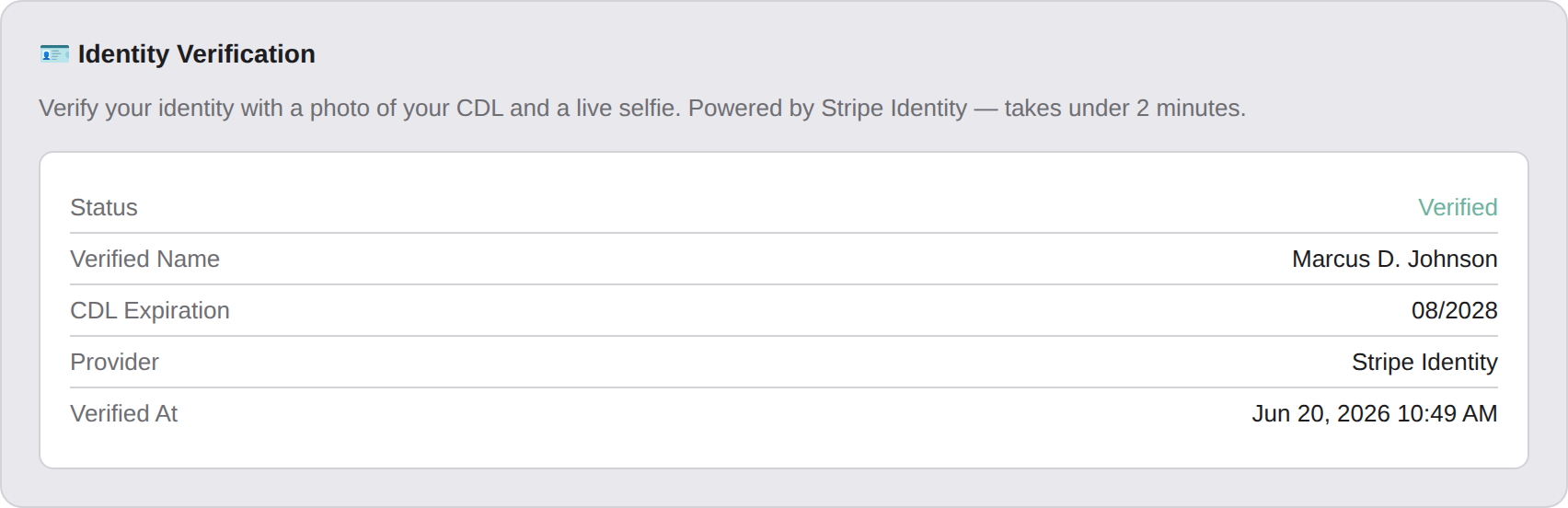
Vetting a carrier means confirming two separate things: that the company is legitimate, and that the person submitting the paperwork actually has the authority to do so. Purple Squirrel AI checks both.
After Montgomery v. Caribe Transport II, brokers need more than a stored insurance certificate — they need proof that a real screening process happened before a driver was dispatched.
A carrier that was compliant on day one isn't necessarily compliant six months later. Purple Squirrel AI keeps tracking the carriers you've already onboarded, not just the ones going through the initial packet.
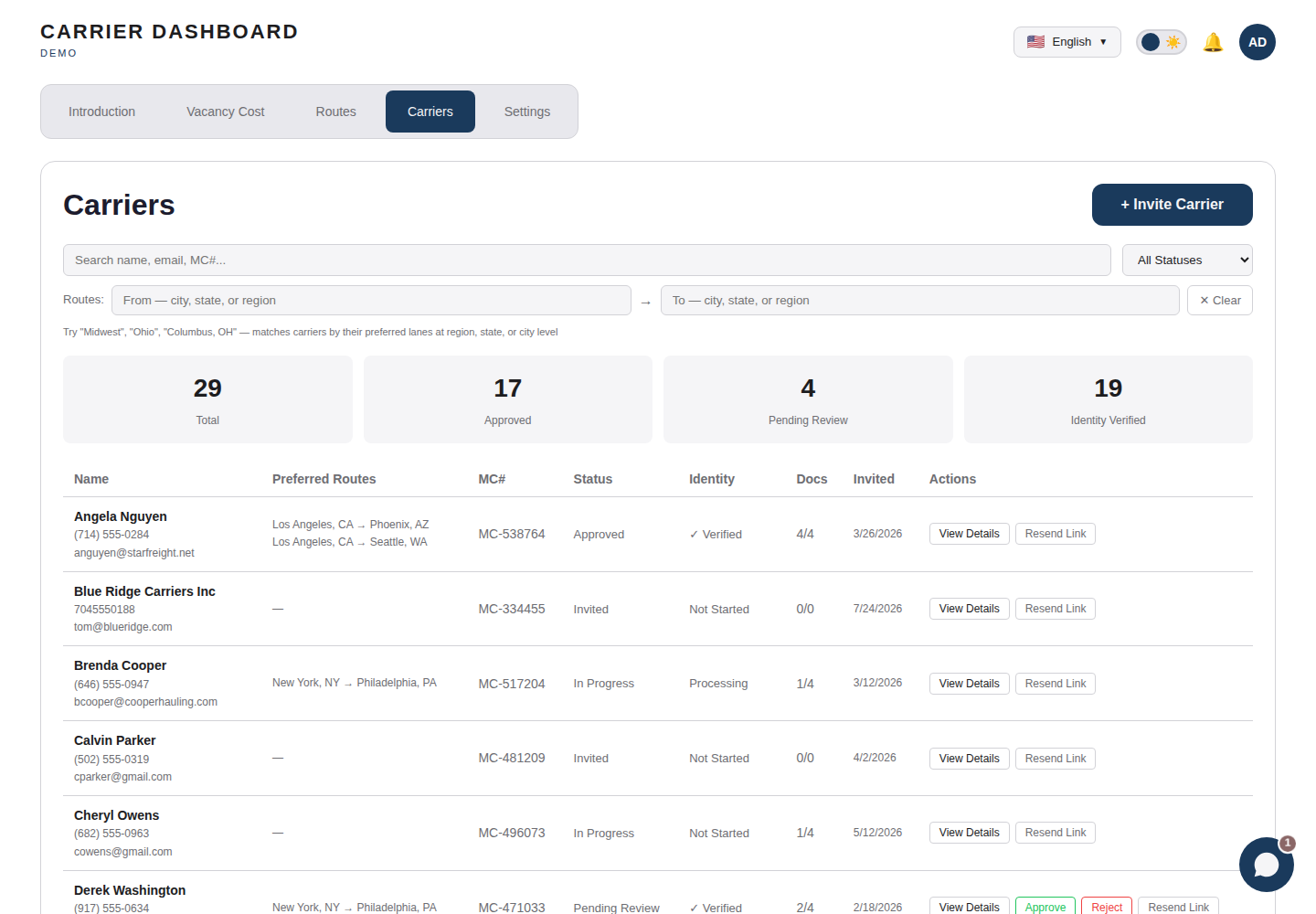
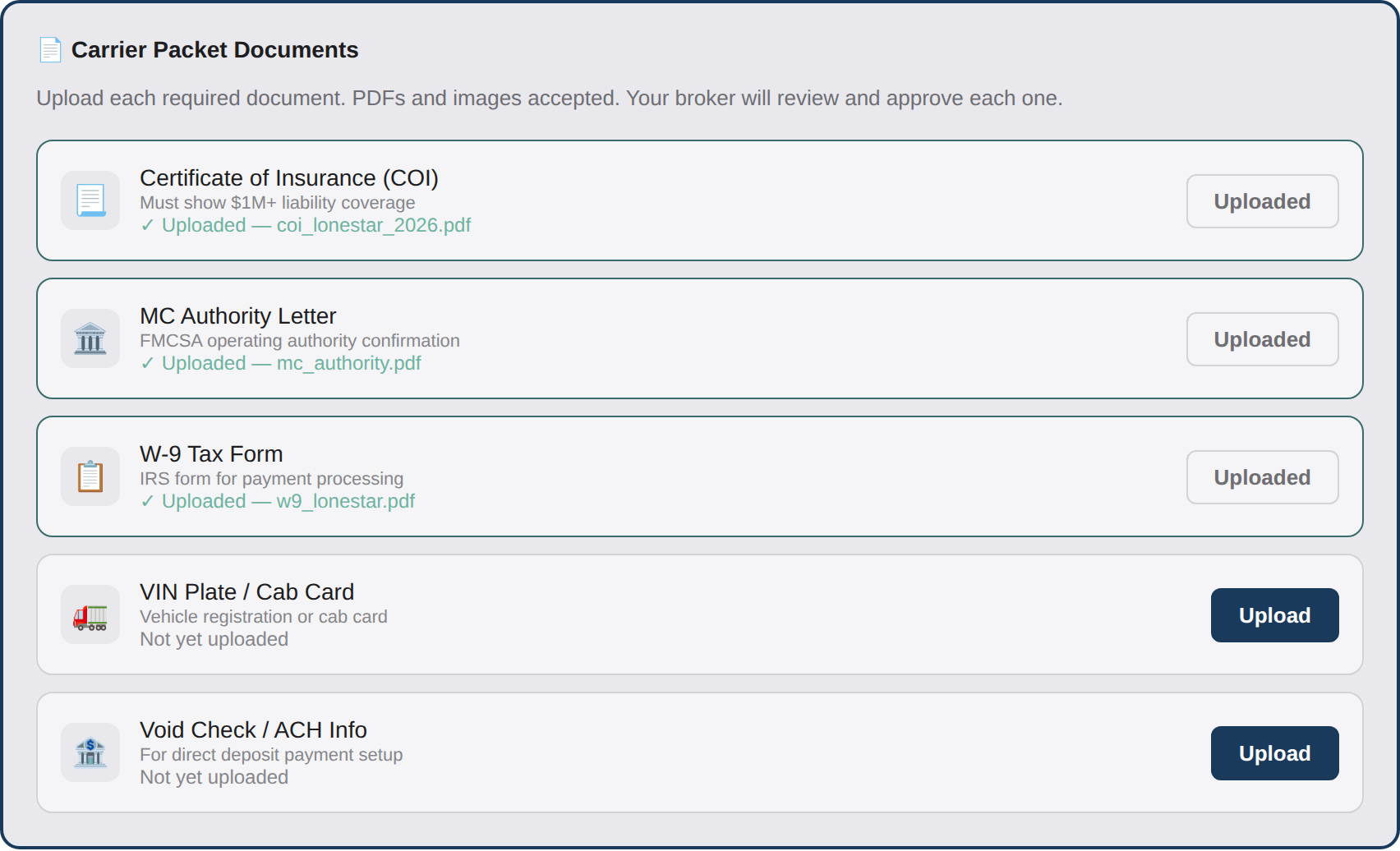
Here's exactly what happens on the carrier's end after you send the invite.
We use the most trusted infrastructure in the industry so you never have to worry about compliance or security.